


Choosing reliable mechanical structural components directly determines the stability, service life and overall cost control of finished equipment. Many manufacturing enterprises only focus on surface dimensional accuracy when purchasing cast parts, but overlook material density, internal porosity, thermal deformation resistance and post-processing compatibility. These invisible hidden defects often lead to frequent equipment failures, increased maintenance costs and delayed delivery cycles in later mass production. Selecting qualified aluminum alloy die casting components can fundamentally avoid these long-term troublesome problems, and greatly optimize the whole production chain efficiency from raw material molding to finished assembly.
Internal pores and loose structures are the most concealed quality hazards of ordinary die casting products. Low-cost inferior castings look smooth and qualified on appearance, yet contain tiny air holes and shrinkage cavities inside. During high-pressure operation, vibration and temperature changes will expand these defects rapidly, causing cracking, air leakage, oil leakage and structural fracture. Ordinary suppliers rarely conduct strict vacuum degassing and pressure testing processes, so users cannot detect problems until equipment malfunctions. Professional customized die casting solutions from professional aluminum casting manufacturer adopt integrated precision molding technology, which effectively eliminates internal defects and ensures consistent compactness of each finished part.
Most buyers misunderstand that all aluminum die castings have identical corrosion resistance and lightweight performance. In fact, different alloy ratios, molding temperatures and cooling processes create huge differences in mechanical properties. Ordinary die cast aluminum parts are easy to oxidize and deform under outdoor humid, high-temperature or vibration working conditions. They also have poor welding performance and low surface coating adhesion, requiring repeated repair and secondary processing. High-grade die casting aluminum alloys balance lightweight weight, high structural strength, wear resistance and atmospheric corrosion resistance, adapting to automobile accessories, intelligent equipment, industrial machinery and various harsh working environments stably.
Assembly matching error is another common pain point that plagues downstream processing factories. Non-standard customized castings often have inconsistent tolerance accuracy, irregular hole positions and uneven wall thickness. Workers need extra time to polish, trim and adjust during assembly, which reduces production speed and increases labor costs. In mass batch production, dimensional deviation will accumulate continuously, resulting in a large number of unqualified finished products. Precision die casting parts manufactured with mature molds and digital detection systems maintain stable tolerance standards in each batch, realizing seamless matching with subsequent CNC machining, surface treatment and overall assembly procedures.
Long-term comprehensive cost is far higher than the initial purchase price of cast parts. Cheap low-quality castings save money at the time of order placing, but bring frequent after-sales maintenance, parts replacement, production shutdown losses and customer complaint risks. High-precision die casting products have ultra-long fatigue service life, low damage rate and stable batch quality, which greatly reduces overall operating costs for enterprises. Reasonable material selection and standardized die casting process also improve product qualification rate, reduce waste of raw materials and processing time, and create continuous economic benefits for long-term cooperative production.
Common Quality Problems & Performance Comparison of Aluminum Die Casting Parts
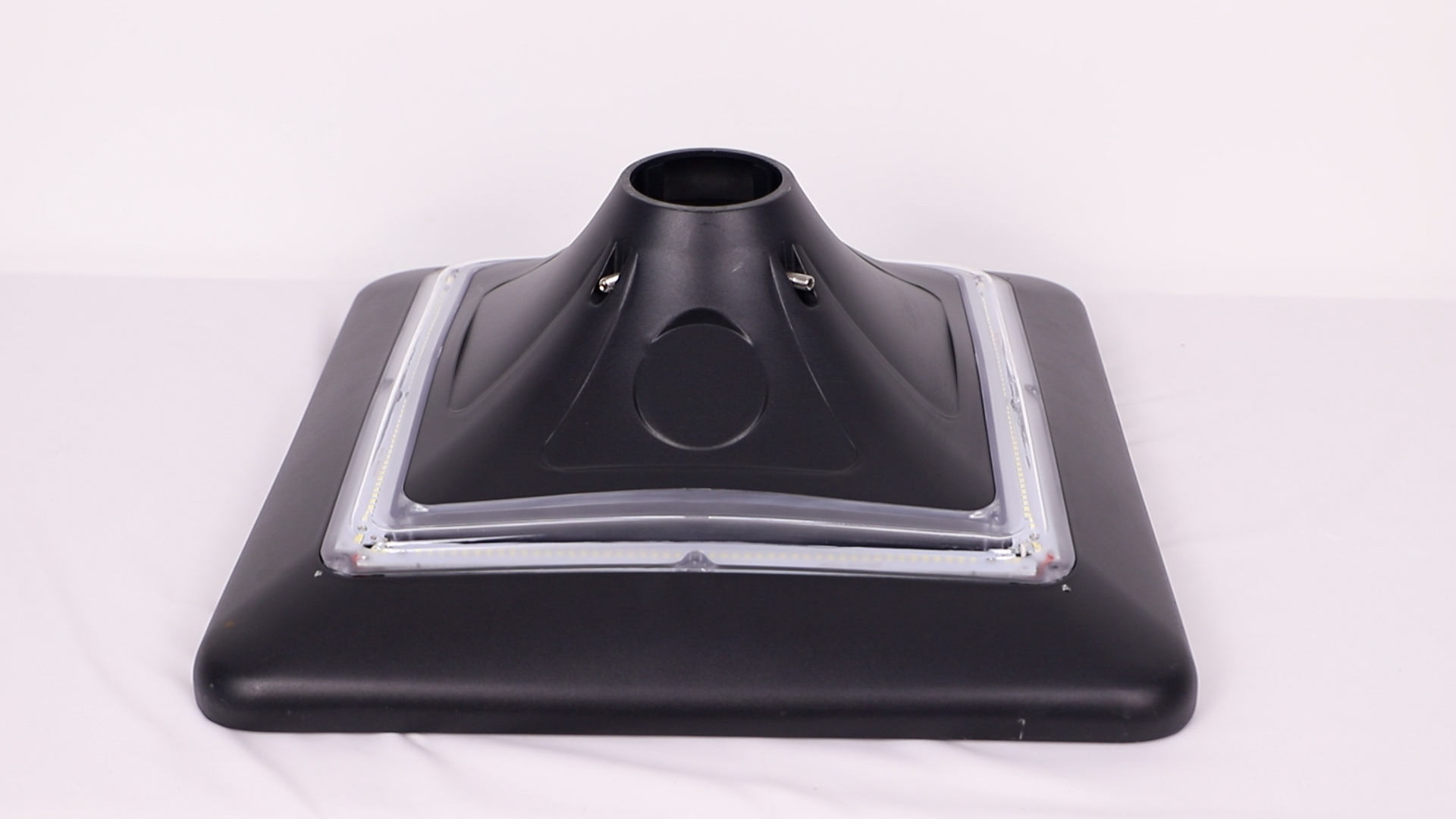
| Defect Type | Ordinary Die Casting Parts | High-Precision Aluminum Alloy Die Casting Parts | Influence on Actual Production |
|---|---|---|---|
| Internal Porosity & Looseness | Serious and widespread | Almost eliminated completely | Causes air leakage, oil leakage and structural fracture |
| Dimensional Tolerance Deviation | Large unstable error | High-precision stable tolerance | Affects assembly efficiency and product matching degree |
| High Temperature Deformation | Easy to deform and soften | Low thermal deformation rate | Ensures stable operation under continuous high-load work |
| Surface Coating Adhesion | Easy to fall off and peel | Firm and durable | Extends overall service life of finished equipment |
| Batch Consistency | Big difference between batches | Uniform and stable in mass production | Avoids sudden quality problems in large-scale assembly |
Surface treatment adaptability directly affects the final appearance grade and application scenario of die casting parts. Unqualified aluminum castings have rough internal and surface structure, which cannot meet anodizing, powder spraying, electroplating and other high-standard surface treatment requirements. After treatment, problems such as color difference, spot corrosion and paint peeling will appear frequently. Premium die casting blanks have smooth and dense surface structure, supporting diversified customized surface processes, meeting aesthetic requirements of consumer electronics, automobile exterior parts and high-end intelligent machinery, while enhancing anti-rust and wear-resistant performance further.
Working condition adaptability distinguishes inferior castings from high-quality industrial parts greatly. Many products can operate normally under indoor static low-load environment, but fail quickly when used outdoors, under strong vibration, frequent impact or alternating cold and hot temperatures. Special aluminum alloy die casting materials optimize tensile strength, impact resistance and fatigue resistance, adapting to automotive chassis parts, motor housings, communication equipment shells, automation mechanical structures and other complex working conditions stably for a long time. No frequent replacement or maintenance is required, greatly improving operation reliability of complete machines.
Mold customization and batch supply capacity also determine whether suppliers can match enterprise development rhythm. Small-scale informal manufacturers can only provide universal standard parts, unable to customize special-shaped structures, special thickness and special interface castings according to customer drawings. At the same time, delivery delay and insufficient batch stock often hold up the whole production plan. Formal large-scale die casting factories support drawing customized molding, rapid mold opening, stable mass production and on-time delivery, cooperating with small-batch trial production and large-scale mass supply demands at the same time.
To sum up, selecting aluminum alloy die casting parts cannot only rely on unit price comparison. Identifying hidden internal quality defects, matching actual working condition performance, ensuring assembly compatibility and controlling long-term comprehensive cost are the core standards of reasonable procurement. Scientific die casting material matching, precise digital molding process and strict full-inspection quality system jointly create high-value industrial cast products, helping manufacturing enterprises avoid unnecessary losses and improve core market competitiveness steadily.